

Have you ever dealt with a ketchup packet exploding in your bag or sauce dripping everywhere during a picnic? That’s exactly the frustration Cole and Emily Williams aimed to solve. They brought their innovative dehydrated ketchup slices to Shark Tank, hoping for a big break. Many viewers still wonder what happened to this clever idea and why it vanished despite the buzz.
This piece dives deep into the full story, from the exciting pitch to the tough realities that followed. You’ll get the facts on the deal, the hurdles, and key takeaways for anyone curious about food startups.
Shark Tank Episode Details
Slice of Sauce appeared in Shark Tank Season 12 Episode 10, which aired in January 2021. Cole and Emily Williams, a husband-and-wife team from Austin, Texas, stepped into the tank full of energy.
They sought $200,000 for 10% equity. Their product? Thin, shelf-stable slices made from real condiments like ketchup and sriracha. No more messy packets. These portable condiment innovations fit right on burgers, sandwiches, or snacks without refrigeration.
The sharks tasted the samples. Mark Cuban called it a great concept. Others liked the flavor but raised red flags about pricing and readiness. At the time, the company relied on manual manufacturing, which kept costs high and scaling slow.
They shared their journey. A 2018 Kickstarter raised over $30,000 quickly. They invested personal funds too. Yet production delays meant they weren’t fully launched yet. This pre-revenue status worried several sharks.
Read More: Tristen Ikaika – Shark Tank Update 2026
The Slice of Sauce Shark Tank Pitch: A Revolutionary Condiment Idea
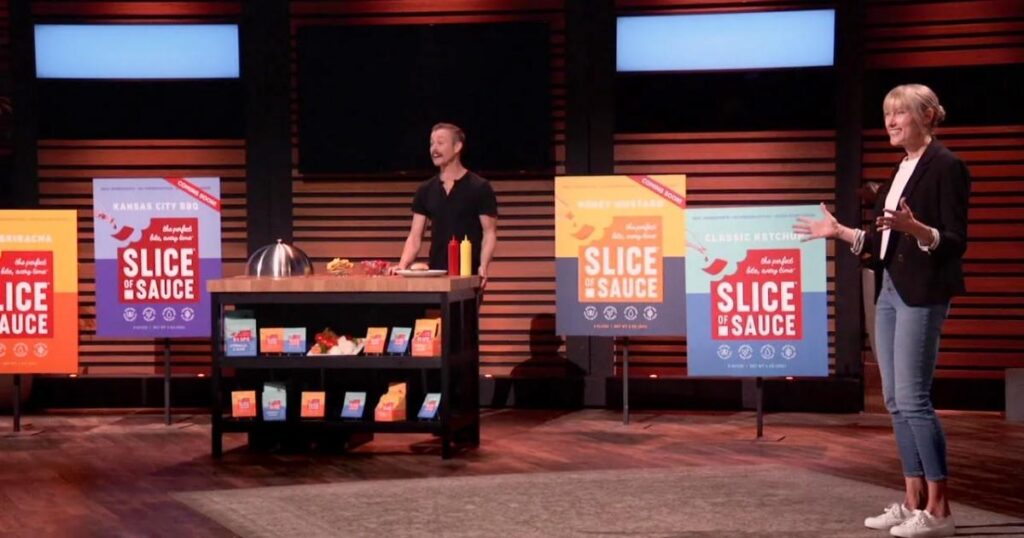
Picture this: You’re at a tailgate or camping trip. Instead of fumbling with sticky bottles, you pull out a pouch of dehydrated ketchup slices. Pop one on your burger. No drips, no waste, no mess. That’s the promise Cole and Emily pitched.
They positioned it as a mess-free sauce alternative in a crowded condiment market. Traditional ketchup costs pennies per serving. Their premium ketchup alternative aimed higher, targeting convenience seekers who value portability.
The slices came in flavors like Classic Ketchup and Spicy Sriracha. Priced at $5.99 for an eight-slice pouch, they targeted premium buyers. The couple highlighted shelf-stable food products perks, perfect for road trips, lunches, or outdoor adventures.
They’d earned recognition before the show. As finalists in the Naturally Austin Pitch Slam, they built early hype. The idea felt fresh: a gourmet sauce startup disrupting everyday condiments with innovation.
Sharks saw potential. The portability appealed to busy lifestyles. Yet questions lingered about mass appeal and cost.
Slice of Sauce Shark Tank became a fan favorite for its creativity, even if the road ahead proved rocky.
Deal Breakdown with Alex Rodriguez and Why It Didn’t Close
The tank got lively. Barbara and Lori dropped out early, citing financial risks. Kevin O’Leary offered $200,000 for 5% equity plus royalties until $700,000 payback.
Then guest shark Alex Rodriguez jumped in. He proposed $200,000 as convertible debt. It would turn into equity (around 15-20% depending on sources) once sales hit $1.8 million. The couple accepted quickly.
Excitement peaked. Emily later called it a lucky partnership. They planned to use funds for automated food processing systems to fix production bottlenecks.
But the deal never finalized. Post-show updates show no closure on the agreement. Reasons aren’t public, perhaps due diligence issues or mismatched expectations. This convertible debt agreement fell apart, leaving the founders without the capital boost.
Many food startup due diligence failure stories echo this. Sharks often back out quietly when deeper checks reveal hurdles.
Production Challenges, Pricing Issues, and Market Reality
Reality hit hard after the episode. The company struggled with food manufacturing challenges. Early slices came from manual processes in commercial kitchens. This drove high production costs and limited output.
They couldn’t achieve economies of scale fast enough. Scaling food production requires big investment in equipment and supply chains. Without it, costs stayed elevated.
Pricing drew criticism. At $5.99 per pouch, each slice cost far more than traditional condiments. Consumers loved the idea but hesitated at the premium tag for something so basic.
The condiment industry competition is fierce. Giants like Heinz dominate shelves. Niche players face tough retail distribution strategy battles. Slice of Sauce aimed for partnerships (some mentions of McCormick or Stubb’s interest floated), but nothing stuck long-term.
Post-Shark Tank, they shipped initial orders. Inventory ran out quickly. Complaints piled up about delays and unresponsive support. The innovative concept clashed with practical market demands.
Where Slice of Sauce Is Now and Lessons from the Startup’s Closure
As of 2026, Slice of Sauce no longer operates. The website went dark years ago. Social media stopped in late 2021. Last signs of activity faded by 2022.
The business closure around 2022 marks a classic food startup failure case study. Great idea, passionate founders, TV exposure, yet scaling and costs proved fatal.
Founders moved on. Emily and Cole pursued other paths, with limited public details tying back to the brand.
What lessons stand out?
- Validate production early. Manual methods work for prototypes, but automated food processing systems matter for growth.
- Price realistically. Premium positioning needs strong justification in competitive markets.
- Secure funding that truly closes. Deals can fall apart post-show.
- Build resilience. Many startups face similar hurdles; persistence and pivots help some survive.
This story reminds us innovation alone isn’t enough. Execution, timing, and market fit decide success.
FAQ’s
What episode was Slice of Sauce on Shark Tank?
It appeared in Shark Tank Season 12 Episode 10, airing in January 2021.
Did Slice of Sauce get a deal on Shark Tank?
Yes, they accepted Alex Rodriguez’s offer of $200,000 as convertible debt converting at $1.8 million in sales, but the deal never closed.
Why did Slice of Sauce go out of business?
High production costs, scaling difficulties with manual manufacturing, pricing concerns, and inability to secure lasting partnerships led to closure around 2022.
What flavors did Slice of Sauce offer?
They featured Classic Ketchup and Spicy Sriracha, with plans for more like hot sauce varieties.
Is Slice of Sauce still available to buy?
No, the company shut down, and products are no longer sold online or in stores.

Ryan Mitchell is a seasoned digital marketing strategist and content writer with over 8 years of experience in SEO and guest posting. He has contributed to top business publications, helping brands grow their online visibility through data-driven strategies. Ryan focuses on ethical link building and sustainable content growth practices.